📈 Challenge pace tracker
Reading Challenge Progress Calculator
Measure your reading challenge progress by books or pages, compare elapsed time with completed progress, reserve buffer days, and calculate the catch-up pace needed to finish on target.
Load a realistic challenge shape, then adjust goals, pages, elapsed days, remaining days, average book length, buffer, and active reading rhythm.
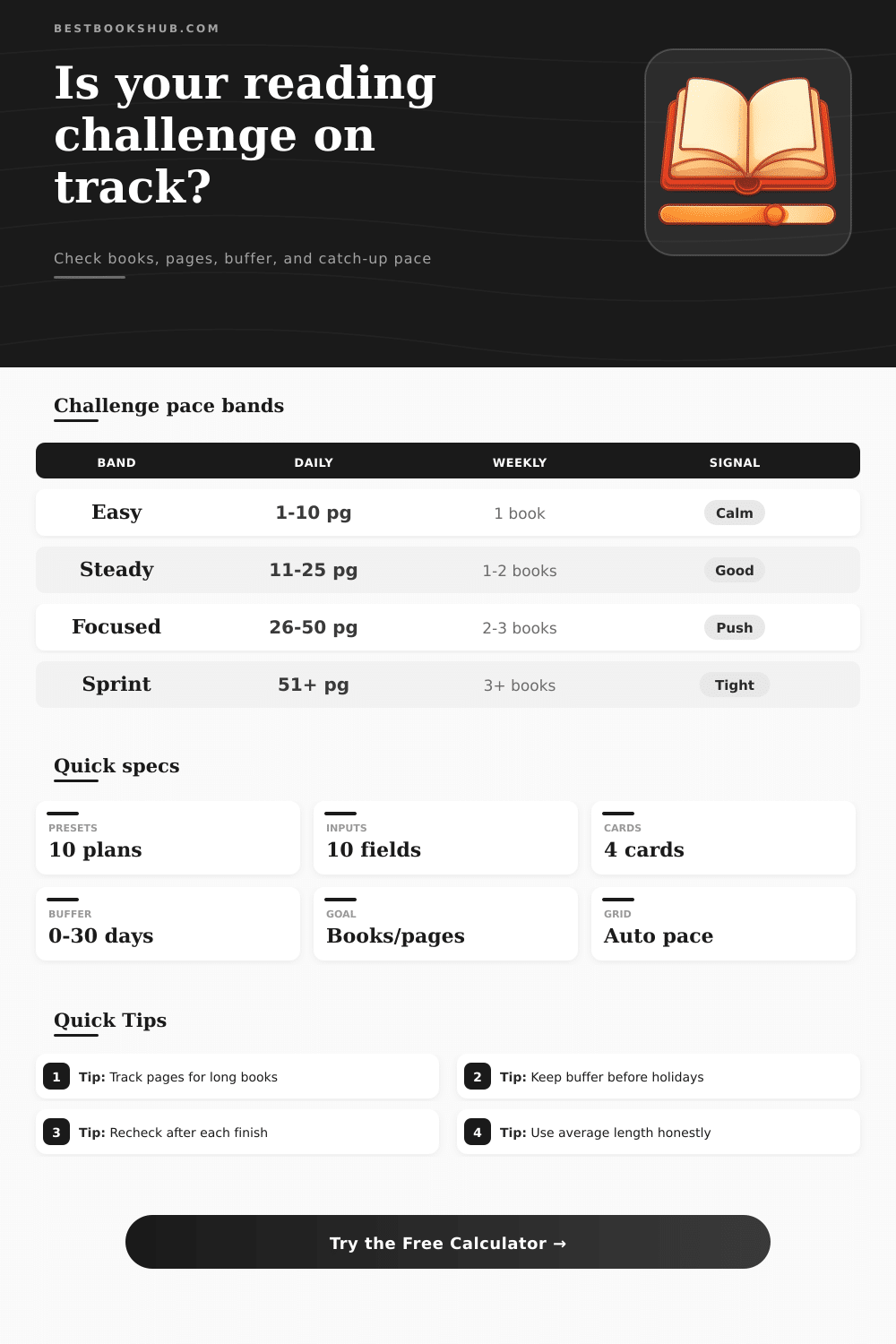
| Pace band | Pages per active day | Book-count feel | Planning signal |
|---|---|---|---|
| Easy | 1-10 pages | Short daily touchpoint | Good for long windows, low stress goals, or maintaining a habit. |
| Steady | 11-25 pages | About one average book every two weeks | Usually sustainable with a modest nightly routine. |
| Focused | 26-50 pages | One book most weeks | Works when reading sessions are protected and book lengths are honest. |
| Sprint | 51+ pages | Multiple books per week or long sessions | Best for short rescue windows, vacations, or very short books. |
| Reading mix | Average pages | Pages per hour | Challenge note |
|---|---|---|---|
| Novellas and short novels | 120-220 pages | 35-60 pages/hour | Book-count progress can look fast, so page goals add balance. |
| General fiction | 280-360 pages | 30-45 pages/hour | A solid default for annual book challenges. |
| Fantasy, classics, dense literary | 450-800 pages | 15-35 pages/hour | Use page mode or a larger buffer to avoid sudden catch-up spikes. |
| Nonfiction and study reading | 250-450 pages | 10-30 pages/hour | Notes, rereading, and chapters can slow the page rate. |
| Window | Typical goal | Useful buffer | Best tracking unit |
|---|---|---|---|
| 30-day challenge | 1-6 books | 2-4 days | Pages per active day because each missed day matters. |
| Quarter challenge | 4-15 books | 5-10 days | Books plus pages for mixed-length reading lists. |
| Annual challenge | 12-100 books | 14-30 days | Book count for motivation, pages for fairness. |
| Custom school or club window | By syllabus or list | 10-20% of days | Pages when finish dates and assignments matter. |
| Signal | Pace ratio | Meaning | Next calculation check |
|---|---|---|---|
| Ahead | 1.10x or more | Progress is outpacing elapsed time. | Protect the buffer instead of raising the goal too early. |
| On track | 0.95x-1.09x | Goal progress and time progress are close. | Recheck weekly or after each finished book. |
| Watch | 0.80x-0.94x | The gap is real but usually recoverable. | Calculate catch-up pages before the next busy stretch. |
| Rescue | Below 0.80x | The remaining pace is materially higher than the original pace. | Switch to page tracking and choose a realistic active-day plan. |
DISCLOSURE: This post may contain affiliate links, meaning when you click the links and make a purchase, I receive a commission. As an Amazon Associate I earn from qualifying purchases.
At the beginning of the year, you confidently sign up for a reading challenge. Fifty-two books seem doable; one book per week! In January! At the end of April, reality hits. Life becomes busy at work, you travel, and your pile of unread paperbacks accumulates.
If the issue were that you’ve stopped reading completely, you’d have a different problem. The issue is that you are no longer keeping track of how fast you have to read now versus how fast you wanted to read before. For everyone, their goal is treated like a fixed amount far off in the future, but it should of been a dynamic figure that updates with each passing day. If you read two books in March but zero in May, then you’re reading slower than before. Even if you’ve racked up just as many book as this time last year.
How to Keep Up with Your Reading Challenge
The tool at the top of the post will do calculation for you. It’ll turn your hazy sense of lagging behind into actual pages-per-day. That’s what saves most challenges, or kills them, when they switch from “book-count” mode to “page-count” mode. They also make you set actual constraints.
These inputs include how many books you think you’ll read. How long (on average) do those books tend to be? They are far more important then they first seem. When you track progress by counting books, and then enter into the system, say, that you tend to read some pretty chunky fantasy novels… well, then it’s going to distort your results. You could end up reading half as many pages as somebody who tackles some fairly heavy historical fiction, while hitting your number on book count through, say, a couple series worth of slim novellas.
The tool can absorbs this distortion by letting you count books strictly, go by the number of pages you read, or use a combination of both that favors whichever metric is harsher. This forces you to be honest with yourself about whether a five-hundred-page epic deserves the same amount of time and mental effort as a two-hundred-page pamphlet.
The other variable that most readers neglect until it’s too late is buffer days. You think “I’ll read every day,” and life doesn’t cooperate with such rigidity. Fourteen to thirty days of buffer creates slack for your reading habit. When you need a vacation, sick days, or just feel like your brain won’t absorb anything, those days are there for you. If you don’t have them, even minor interruptions force you to work harder every day, which leads to burnout. Having them means you’ve got some slack to absorb these shocks without panicking over the final date.
Don’t let the stress spiral by checking in daily. Check in every week instead. One bad reading day doesn’t mean you’re failing. One bad month of reading is cause for adjustment. It’s laid out in the reference table on the page, which breaks down pace bands ranging from easy upkeep to full-on sprints.
If the necessary pace shifts into the sprint or focused zones, it means you will has to adjust your plan before giving up altogether. You could do this by trimming back your goal slightly or ramping up your active reading time each day. Any journey starts with first step, but it’s easy to get off track. The most difficult aspect of facing a challenge isn’t beginning, it’s adjusting along the way.
For example: People will delay till December and realize they’re behind, and then they will panic-read through those last four months like a chore. That makes reading feel like work, rather than fun! If you check your pace ratio and adjust it every so often, you’ll find yourself able to tweak little habits in July (like reading a lighter book instead of a difficult academic one?). Wake up 10 extra minutes?) and avoid the Desperate Panic Phase that happens in November.
In the end, it’s not about finishing exhausted (it’s about finishing satisfied). By keeping track of time, by keeping track of pages, you’ll have a clear picture of what this year will look like. You’ll begin to plan instead of guess. The pile on your nightstand won’t feel like a threat anymore; it’ll feel like a roadmap. Knowing exactly how many pages are required for an active day means the mountain doesn’t seem so steep. It feels like another chapter, one page at a time, held steady by numbers that actualy make sense.