📅 Chapter-a-night reading planner
Chapter-a-Night Finish Date Calculator
Estimate the finish date for a book, series volume, or study read from chapters remaining, average pages per chapter, weekly reading nights, skipped nights, buffer nights, start date, reading speed, and time per night.
Pick a scenario, then adjust chapters, pace, skipped nights, and buffers to match the book on your nightstand.
DISCLOSURE: This post may contain affiliate links, meaning when you click the links and make a purchase, I receive a commission. As an Amazon Associate I earn from qualifying purchases.
The grid previews up to the first 28 scheduled chapter nights. Later chapters follow the same pattern until the finish date.
| Book type | Typical pages per chapter | Nightly fit | Calculator setting |
|---|---|---|---|
| Cozy mystery or romance | 8-16 pages | Easy weeknight chapter | Strict one chapter usually works. |
| General literary fiction | 12-24 pages | Moderate evening read | Use 35-45 minutes if prose is dense. |
| Fantasy or historical novel | 18-35 pages | Longer session | Split long chapters when minutes are tight. |
| Nonfiction with notes | 10-28 pages | Variable pace | Lower pages per hour for annotation time. |
| School or study read | 8-22 pages | Best with buffers | Add skip nights for assignments and exams. |
| Reading mode | Pages per hour | 16-page chapter | Best use |
|---|---|---|---|
| Careful notes | 12-22 pages/hour | 44-80 minutes | Nonfiction, school reading, close analysis. |
| Relaxed fiction | 28-42 pages/hour | 23-34 minutes | Most chapter-a-night plans. |
| Fast familiar genre | 45-65 pages/hour | 15-21 minutes | Series catchups and light prose. |
| Skim or reread pass | 70-100 pages/hour | 10-14 minutes | Reviewing a book already known. |
| Chapters remaining | 3 nights/week | 5 nights/week | 7 nights/week |
|---|---|---|---|
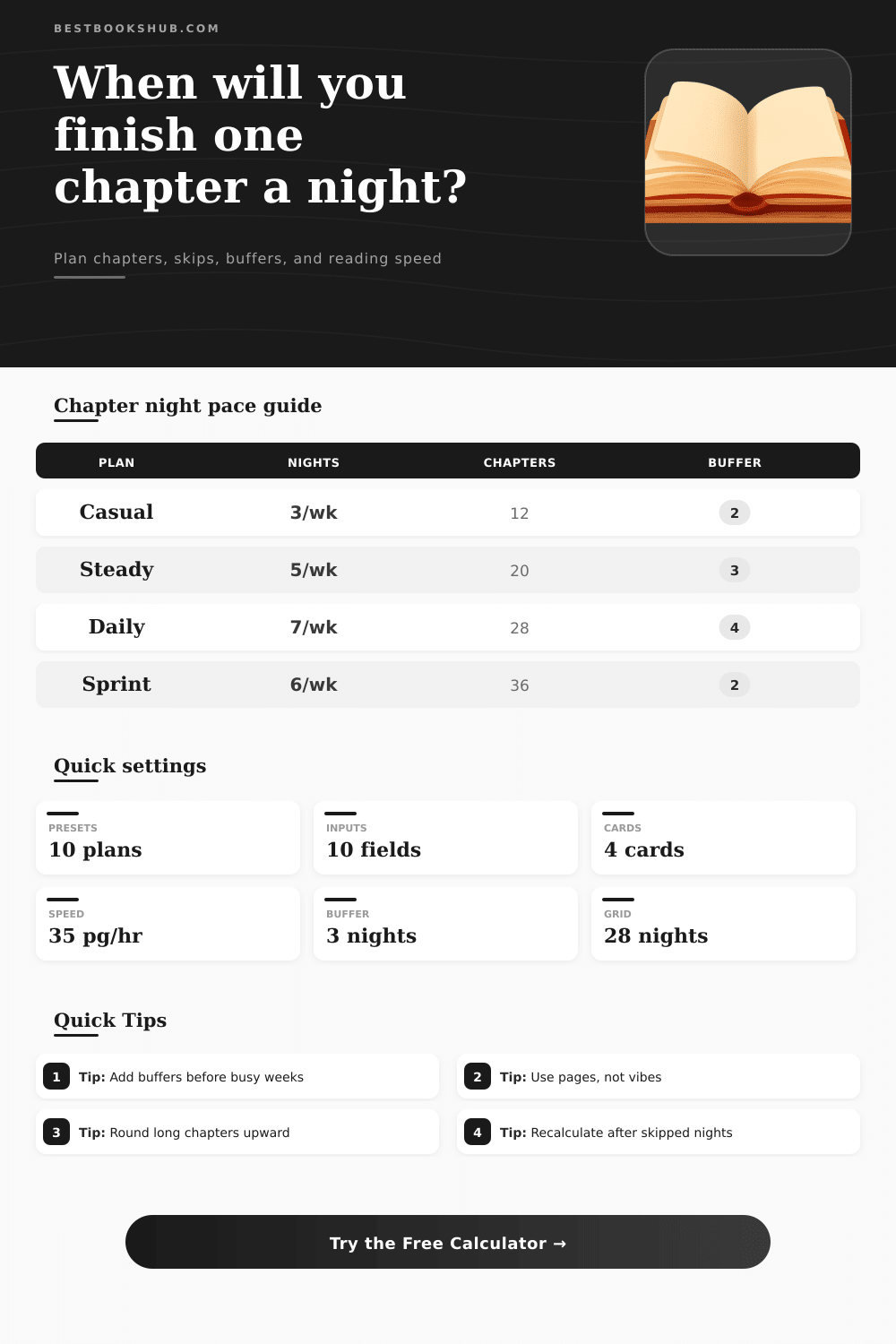
| 12 chapters | About 4 weeks | About 17 days | About 12 days |
| 20 chapters | About 7 weeks | About 28 days | About 20 days |
| 28 chapters | About 10 weeks | About 39 days | About 28 days |
| 36 chapters | About 12 weeks | About 50 days | About 36 days |
| 52 chapters | About 18 weeks | About 73 days | About 52 days |
| Calendar factor | What it represents | Finish-date effect | Planning note |
|---|---|---|---|
| Known skip nights | Nights already unavailable | Pushes scheduled chapters later | Use for travel, events, illness, or deadlines. |
| Buffer nights | Optional cushion before done | Adds margin after the last chapter | Useful before book club or library due dates. |
| Low nights per week | Fewer eligible reading slots | Spreads chapters across more weeks | Works well when consistency matters more than speed. |
| Split chapter mode | Long chapters take extra slots | Can increase reading nights needed | Best when chapter minutes exceed available time. |
| Double short chapter mode | Roomy nights combine chapters | Can reduce finish date | Best with short chapters and predictable evenings. |
When you start that fat book, most of us starts with good intentions and vague math. You start with some kind of estimate in mind, some vague guess about how much time it’s going to take. I’ll read one chapter a night. That means I’ll be done by next Tuesday! It doesn’t always work that way. Sometimes long chapters gets in your way. Sometimes life happens: travel, hard days at work. Instead of an easy eight-page scene, you find yourself reading forty pages of dense prose in the latest chapter. There’s a difference between your pace and reality of the finish line. You didn’t anticipate the unseen factors when you created your reading plan, and that’s why you missed the mark.
Put in how many nights per week you have available, plus number of chapters left, and the calculator (above) will crunch the numbers for you. No more guesswork on conversions. The calculator forces you to realize that a calendar day is different then a reading night. A twenty chapter book doesn’t take twenty days if you’re reading five nights a week. Assuming no missed sessions, it’s closer to four weeks. Instead of counting time slots, they counts chapters. The calculator makes it clear.
How to Plan Your Reading Time
You plug in your known skip-nights due to vacation/exams, etc. You can also tack-on buffer-nights for unexpected delays. More than anything else, it’s important to consider how many pages is in an average chapter. If your chapters are 12 pages long (like in a cozy mystery), that’s a quick bedtime story: 20 minutes max. When your chapters are 30 pages long (as they tend to be in a fantasy epic), this take a bit more effort. Do you only have half an hour to spare? Split up the session.
Here’s what difference looks like in genres and page density. Change the number of pages you read per hour to suit your own reading rhythm. Most people who read for fun reads somewhere around 35 pages per hour. Academic material or really dense non-fiction may slow you down to as few as 15 pages per hour.
But skipping without making an adjustment to your plan will sabotage a reading streak fast. Don’t beat yourself up by trying to make up lost ground through marathon sessions. You should of planned better. The calculator lets you enter skips when you begin. It then divides the remainder of chapters across additional weeks. It postpones the end date. You can do this at your own pace, it turns the stress into a new deadline.
Buffer nights do the same thing. A buffer night isn’t intended to be skipped; it’s simply a cushion. By adding three buffer nights prior to your expected completion day, you has room for unexpected missed days, yet still get to say you completed on time. To make the plan feel realistic, set a weekly pattern. Maybe you want to get through the chapter list by end of the week so that weekend days are free. Or maybe you like to unwind at night with some light reading after work hours.
How does it all translate? Here’s what that looks like in the grid preview: The grid preview gives you the first few weeks of your plan. This will help you get a better idea if this load is doable. Does the grid show an extended period of long chapters on a hectic work week? Split those up! Add extra buffer time! Choosing the right strategy for long chapters prevents frustration.
The “one chapter per night” rule doesn’t work if a chapter’s too long for the night. Usually, it’s better to split that long chapter into multiple nights (at a cost of adding a couple days to your overall timeline). Otherwise, try reading two quick chapters on roomy nights. This tool takes those tradeoffs and computes them for you. You’ll see exactly what each decision does to the end date.
It’s not about how fast you read; it’s about being consistently on-plan. It allows you to build in buffers, skips, and realistic pacing so you don’t feel guilty for skipping a night here or there. Instead of having a hazy dream of finishing, you have a workable plan, one that actualy works within your real life.
The finish line is always in sight. And maybe the way to get there won’t be as you’d envisioned… But the plan will be there.