✍ Manuscript planning tool
Manuscript Milestone Calculator
Turn a draft target, current word count, writing calendar, and buffer time into clean manuscript checkpoints with dates and word targets.
| Milestone | Target words | Words from now | Target date | Status |
|---|---|---|---|---|
| Calculate the plan to show milestone dates. | ||||
| Pattern | Best use | Typical checkpoints | Planning note |
|---|---|---|---|
| Quarters | Simple drafts | 25, 50, 75, 100% | Clear and easy, but late to reveal small slips. |
| Eighths | Novels and theses | 12.5% steps | Balances detail with a readable schedule. |
| Tens | Progress logs | 10% steps | Good for dashboards and weekly reporting. |
| Word blocks | Daily drafting | 5k or 10k words | Best when the final target may still shift. |
| Act structure | Fiction drafts | 25, 50, 75, 100% | Labels checkpoints as act turns and ending work. |
| Pace band | Words/day | Manuscript fit | Use with care when |
|---|---|---|---|
| Careful | 250-500 | Academic prose, research, revision | The deadline is close or chapter feedback is slow. |
| Steady | 600-1000 | Most drafts with a repeatable routine | You also have heavy editing on the same days. |
| Fast | 1200-1800 | Scene drafting, memoir, clean nonfiction | Research and citations are still unresolved. |
| Sprint | 2000+ | Short pushes or fast first drafts | The plan lasts for many consecutive weeks. |
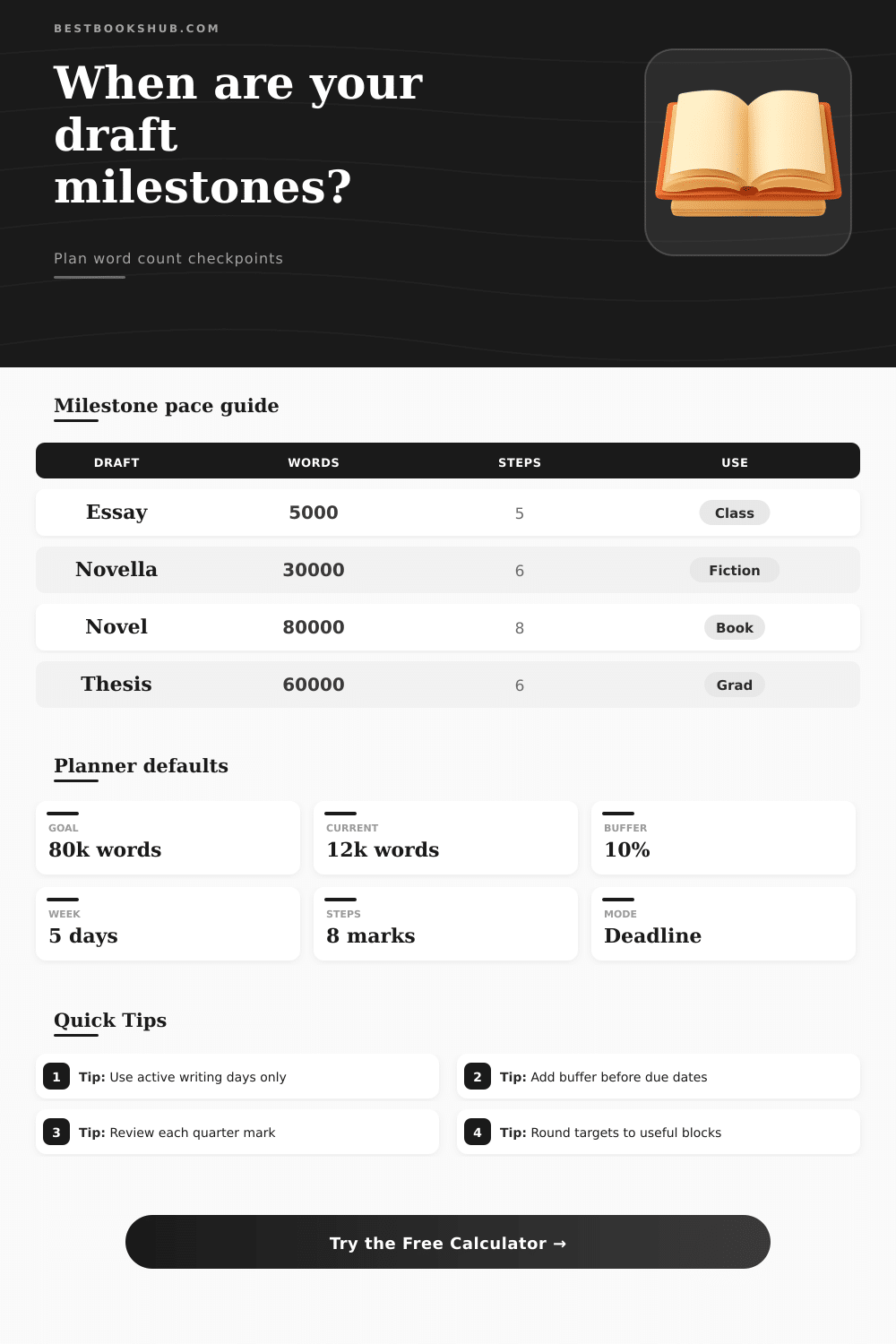
| Project type | Typical words | Useful milestone size | Schedule check |
|---|---|---|---|
| Long essay | 5,000-12,000 | 1,000-2,500 words | Use exact dates because small slips matter. |
| Novella | 20,000-40,000 | 5,000 words | Weekly checkpoints usually feel natural. |
| Novel | 70,000-100,000 | 10,000 words or eighths | Keep a buffer before revision begins. |
| Thesis | 40,000-80,000 | Chapter or 10% marks | Separate drafting from supervisor review time. |
| Dissertation | 70,000-120,000 | 10,000 words | Build in research, figures, and bibliography days. |
DISCLOSURE: This post may contain affiliate links, meaning when you click the links and make a purchase, I receive a commission. As an Amazon Associate I earn from qualifying purchases.
Because we don’t remember that calendar days aren’t writing days, most writers begins with a deadline and conclude with panic. That’s also the space where manuscripts goes to die. Here’s how it goes down: You have three months to produce a draft, so you split out the word count into ninety, convince yourself it will be easy, then life intervenes. In week four, you get sick. On Tuesday, you fall down a research rabbit hole. By week six, the numbers stops adding up and suddenly everything you write feel more like damage control than creative flow.
Mostly, it’s about knowing what you are planning for. But no, not really; that’s all handled for you by the calculator up top, which separates out your passive time from your active work. It also forces you to specify exactly how many days per week you’re actualy available to write. If it says seven but you can only manage four where words come from, well…then your pace is incorrect.
How to Plan Your Writing Time
That’s what everyone gets wrong. They think they’re as available as they are productive. The tool adjusts for that by letting you specify the exact number of days per week you’re going to write. It subtracts any known downtime then divides the remaining word count by however many actual workdays you have left.
Consistency is more important than intensity. Can you sustainably write five hundred words on ten separate day? Or would it be better if you wrote five thousand during an exhausted sprint? And pay special attention to the buffer line. That’s one element most planning tools don’t consider, or they mention as an afterthought. In this case, you’re taking a percentage of your time and dedicating it just to slippage. This happens when a chapter won’t behave or when real life needs you somewhere else. With a ten percent buffer, you have some wiggle room without wasting precious time. It’s an investment in avoiding perfectionism. If you don’t allow yourself breathing space, then a slight hiccup in very beginning of writing (or drafting) will snowball into a disaster long before revisions even get started. The chart at the bottom of page explains this nicely: a small buffer prevents big problems later.
Your choice of milestone pattern determine what success looks like. For example, some writers prefer big checks every three months which obscures gradual declines in output. You may be falling behind without noticing until it’s too late to catch up. A series of eights or even finer increments will provide more feedback cycles. No need for quarter marks if you’re only marking a quarter and three-quarters. Each milestone become a small victory rather than an insurmountable mountain. It also sustains the forward motion, since goal is never too far away. With this tool, you can switch between different density patterns in real time. It will show you if one feels heavier than the other.
To add additional context and help set reasonable expectations, there’s also the Pace Bands. With a repeatable routine, most drafts will work at a pace between six hundred and one thousand words per day. Academic prose, or heavy research, may make this an optimistic estimate. By comparing your necessary pace against the bands, you can get a sense whether you’re shooting for something heroic (good luck) or something sustainable. That small thing matters because it helps prevent burnout. This isn’t just about writing words; this is about managing energy across months of effort.
How does it help? This input about your writing’s difficulty profile adds some nuance to the estimate: Drafting fiction scenes flows, while revising academic arguments stalls. One stalls, the other flow. Recognize this, and then set a pace appropriate for the mental effort of your task. These aren’t numbers to be intimidated by. They’re guides. You still has to show up. And trust the process you’ve created.
There’s no predicting the future, of course, but that’s not what planning a manuscript is really all about: It’s about preparing for uncertainty. Realistic daily goals, honest buffers between those goals and checkpoints along the way stop the struggle with the schedule and help you accept it. With breathing space in the plan, there’s no more panic. There are just words.