🎙 Chapter runtime planner
Chapter audiobook length calculator
Estimate average chapter length, selected chapter runtime, playback-adjusted wall time, session blocks, and a chapter pacing map from total audiobook duration.
Start from a common audiobook structure, then adjust chapter count, credits, playback speed, buffer, and chapter weighting.
DISCLOSURE: This post may contain affiliate links, meaning when you click the links and make a purchase, I receive a commission. As an Amazon Associate I earn from qualifying purchases.
The map shows the selected chapter plus nearby chapters, using the chosen length pattern and normalized back to the real chapter audio total.
| Chapter | Estimated raw runtime | At selected speed | With buffer | Session fit |
|---|---|---|---|---|
| Run the calculator to build the chapter map. | ||||
| Book type | Total runtime | Common chapter count | Typical chapter length |
|---|---|---|---|
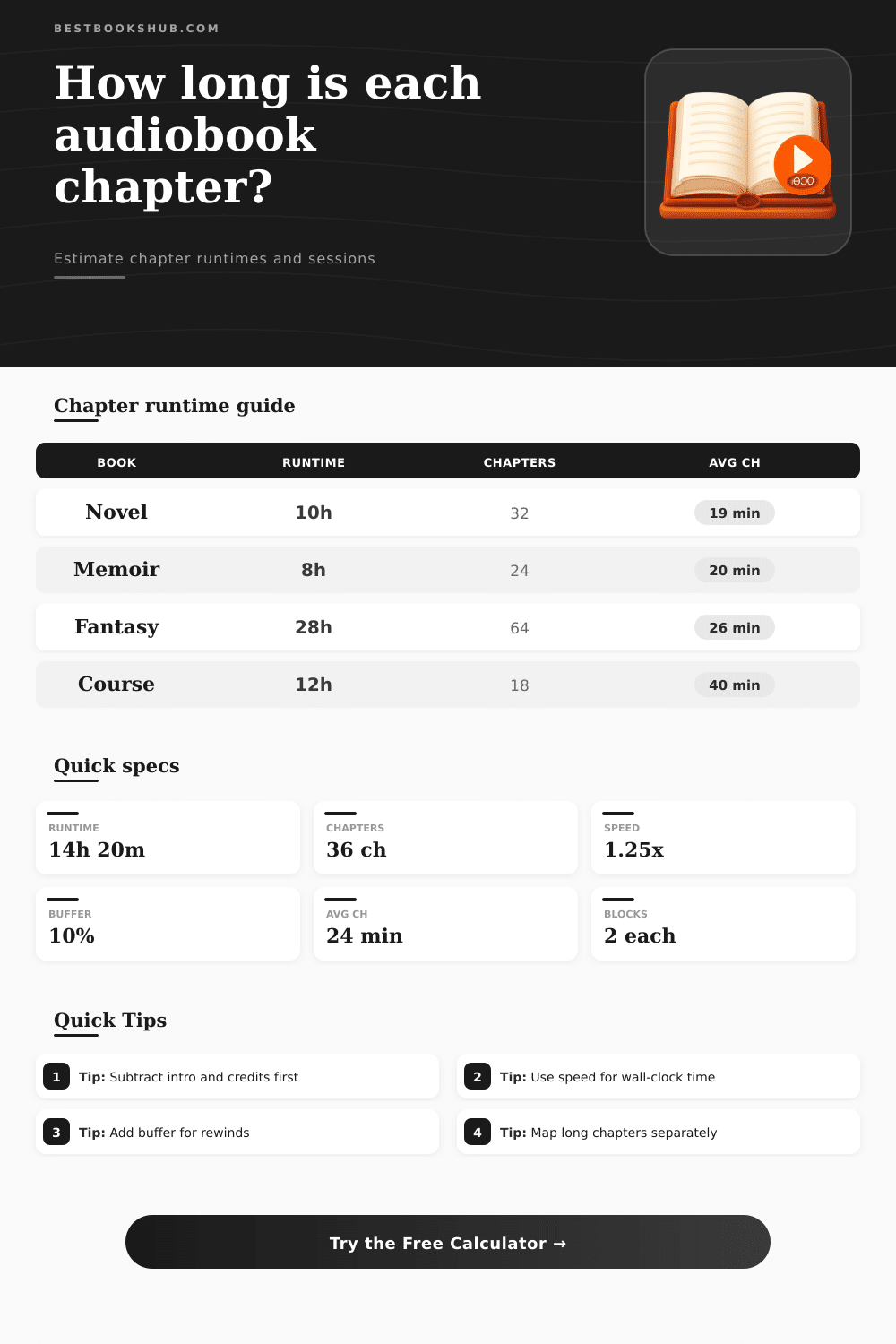
| Short novel or novella | 4-7 hours | 16-28 chapters | 10-20 minutes |
| Mainstream novel | 8-14 hours | 28-42 chapters | 15-30 minutes |
| Epic fantasy or history | 20-40 hours | 45-80 chapters | 25-45 minutes |
| Memoir or business book | 6-12 hours | 12-28 chapters | 20-45 minutes |
| Course or study audio | 8-18 hours | 10-24 lessons | 35-70 minutes |
| Playback speed | 30 minute chapter | 45 minute chapter | Best use |
|---|---|---|---|
| 1.0x | 30 min | 45 min | Careful listening and notes |
| 1.25x | 24 min | 36 min | Commutes and routine sessions |
| 1.5x | 20 min | 30 min | Familiar narration or rereads |
| 1.75x | 17 min | 26 min | Fast review with high focus |
| 2.0x | 15 min | 23 min | Skimming or repeat listens |
| Session length | Good chapter target | What fits well | Planning note |
|---|---|---|---|
| 10-15 minutes | Short chapters | Kids audio, serials, quick recaps | Use one chapter per break. |
| 20-30 minutes | Standard chapters | Commutes, walks, chores | Most fiction chapters fit cleanly. |
| 45-60 minutes | Long chapters | Study blocks and road trips | Add buffer for notes and pauses. |
| 90+ minutes | Multiple chapters | Weekend listens or travel | Use chapter breaks as rest points. |
| Pattern | How it estimates | Best for | Watch for |
|---|---|---|---|
| Mostly even | All chapters stay close to the average. | Balanced novels and many memoirs | Prologue and credits can skew the average. |
| Front-loaded | Earlier chapters run longer, then taper. | Context-heavy nonfiction | Later chapters may feel much shorter. |
| Back-loaded | Later chapters run longer as the book builds. | Epic fiction and argument-driven books | Final chapters may need bigger sessions. |
| Alternating | Odd and even chapters shift around average. | Dual timelines or alternating viewpoints | Single-chapter plans can swing widely. |
| Long middle | The middle section gets extra runtime. | Study audio, complex middle acts | Mid-book chapters may need split blocks. |
Publisher intros, credits, previews, and author notes can make the average chapter look longer than the actual chapter list.
A 32 minute chapter at 1.25x is not a 32 minute session. Divide by speed first, then add your buffer.
Good Intentions: Full Battery You sit down with good intentions and a full battery. The audiobook looks promising, and the commute is long enough to listen. You’ve got twenty-five minutes before the next meeting. Hit play. Get three minutes into the chapter. You realize too late that it’s going to run for forty minutes. Your meeting has started but the narrator is still in first act of a scene.
This is classic scheduling failure. People confuses listed runtime with their actual listening time. Once you plug in your own set of constraints, the calculator do the math. It saves you from having to guess if the chapter will fit in your schedule or spill over into your lunch break.
How to Plan Your Audiobook Time
First, get the raw audio duration correct. The total book length is almost always listed by most player. However, that figure typically accounts for extra stuff like author notes and publisher intros. Those extras can tack on another fifteen or twenty minutes to the clock while adding no narrative value whatsoever. Include that non-chapter audio in your chapter average and every future estimate will be slightly inflated as a result. Remove that from the equation and you have a cleaner baseline, one which measures story time, not promotional material. When you’re looking to squeeze in content between other activities during your limited free time, that distinction makes all the difference.
The problem is that chapters aren’t consistently long or short. Long chapters can be lumped up at the beginning (think of an information-dense book). And some novels stretches the ending, saving the climax for the finale. To address this, you can set your own chapter-length pattern. If you’re reading an epic fantasy and the plot gradually grows more complex, choose back-loaded. For books with parallel timelines that bounce between characters, go with alternating. Once you know the shape, you’ll have an idea of which chapters flies by. That’s not just any old number, it’s a roadmap to the future.
The biggest variable today is this. It is how fast we listen. On average, many of us are speeding along at one point two-five times normal speed to make our reading quota. So, a thirty-minute chapter drops to twenty-four minutes. That’s not the entire equation though. There’s another piece: pauses. You press rewind when narrator stumbles over a word, or when you miss something important. A ten percent buffer takes care of these mini-interruptions. Take away that margin and that’s what really shapes your day. Will you finish on time, ahead of rush-hour traffic? Or will you be stuck when the next chapter kicks off?
But all of this gets down to brass tacks in the output section of each session block. So if you’ve set an overall chapter length at 20 minutes, but your adjusted time comes back as 28, the tool will inform you that it takes two blocks to complete the session. This avoids the pain of beginning a chapter that you cannot complete during your available time. This prompts you to bundle shorter sessions together. Or defer larger ones until you find a specific time just to listen.
Those are spelled out through genre-specific tables on the page. How different does a thriller chapter compare to an academic lecture? How do the demands differ? The other consideration is nonfiction: Some nonfiction requires more concentration than fiction. Complex explanations may require a replay (or taking notes). Perhaps you’ll listen slower. Maybe you’ll pause and think about what you heard. If you’re really absorbing the content, that half-hour business book chapter could turn into an hour. The buffer recognizes this fact of life. By expanding it by 20%, you acknowledge that the time isn’t spent just consuming content, but actualy learning. It shields your schedule from over-optimism.
Instead, think about audiobooks as an extension of radio shows, something that we don’t expect flexibility from. Account for how long it takes you to get through, including rewinding and speed changes. You’ll never miss another meeting or be left scratching your head at where you left off in the plot.
You should of loved listening to your book without stress. Know exactly when the chapter ends so you can pause whenever you please. It is no longer just listening; it becomes an intentional part of your daily routine. And you’re prepared to enter the meeting when it finally begins rather than scrambling to catch the narrators final thought.