📖 Reading sprint lab
Reading sprint goal calculator
Build a short reading sprint from pages, books, protected blocks, pace, note-taking overhead, buffer, and catch-up capacity so the finish line has real numbers behind it.
Choose how the sprint target is measured, then enter the short window, pages already finished, planned reading blocks, and the overhead that slows the sprint.
| Reading mode | Typical pace | Best sprint use | Planning note |
|---|---|---|---|
| Close study | 12-20 pages/hour | Course chapters, research, annotated reading | Add overhead because recall and notes slow the sprint. |
| Dense nonfiction | 22-35 pages/hour | Ideas-heavy books, references, unfamiliar topics | Use a moderate target if the book is concept heavy. |
| Comfortable novel | 35-50 pages/hour | Most fiction and familiar narrative nonfiction | A strong default when your personal pace is unknown. |
| Fast light reading | 50-70 pages/hour | Short chapters, rereads, easy genre fiction | Works for readathons if fatigue is managed. |
| Audiobook equivalent | 70-110 pages/hour | Commute or walk sprints converted to pages | Stable listening time matters more than page speed. |
| Sprint window | Good page load | Block pattern | Risk point |
|---|---|---|---|
| One day readathon | 120-250 pages | Three to five short blocks | Fatigue can reduce pace after the midpoint. |
| Weekend sprint | 180-360 pages | Two longer days or four mixed blocks | One missed block can remove half the margin. |
| Seven-day sprint | 250-600 pages | Daily blocks with one rest or buffer day | Consistency matters more than one heroic session. |
| Fourteen-day sprint | 500-1,000 pages | Five to six reading days per week | Hard books need notes counted as real time. |
| Thirty-day sprint | 800-1,800 pages | Routine reading plus weekly catch-up | The target starts acting like a habit plan. |
| Book or stack | Pages left | Seven-day target | Likely sprint feel |
|---|---|---|---|
| Short paperback finish | 160 pages | 27 pages/day over six days | Comfortable with short daily blocks. |
| Standard novel | 320 pages | 54 pages/day over six days | Strong but realistic with 60-80 minutes daily. |
| Dense nonfiction | 280 pages | 47 pages/day over six days | Tight if notes or references are required. |
| Two short books | 420 pages | 70 pages/day over six days | Needs fast pace or two blocks per day. |
| Research stack | 650 pages | 109 pages/day over six days | Best split into a longer sprint or narrowed target. |
| Missed progress | Quick fix | Better fix | When to reset |
|---|---|---|---|
| One short block | Add 15-30 minutes tomorrow | Split the pages across two days | Usually no reset needed. |
| One full day | Use the next buffer block | Add one extra block within 48 hours | Reset if the score drops below 55. |
| Two days missed | Trim optional chapters or extras | Extend the sprint by two to four days | Reset if daily pages double. |
| Hard book slowdown | Lower pace by 20-35% | Convert the plan to study blocks | Reset if notes take half the time. |
| Fatigue spike | Shorten blocks and add breaks | Protect one lighter recovery day | Reset if focus stays below 70%. |
DISCLOSURE: This post may contain affiliate links, meaning when you click the links and make a purchase, I receive a commission. As an Amazon Associate I earn from qualifying purchases.
When you’re trying to read a novel over the weekend, you get through most of it just fine, until you hit a paragraph that tires out your brain and you spend an hour stuck there. It’s not a question of willpower: it’s a reluctance to accept that reading should be treated as a project with limited resources. Just like wishing a spreadsheet into balance isn’t going to work, neither will wishing a book into completion.
Short-burst reading needs to be treated as a sprint, which means doing some real math rather than relying on vague ambition. Once you set your constraints, the above calculator do the rest. It converts your hazy goal into a specific target each day. It forces you to confront distinction between calendar time and dedicated attention.
How to Read Faster in Short Bursts
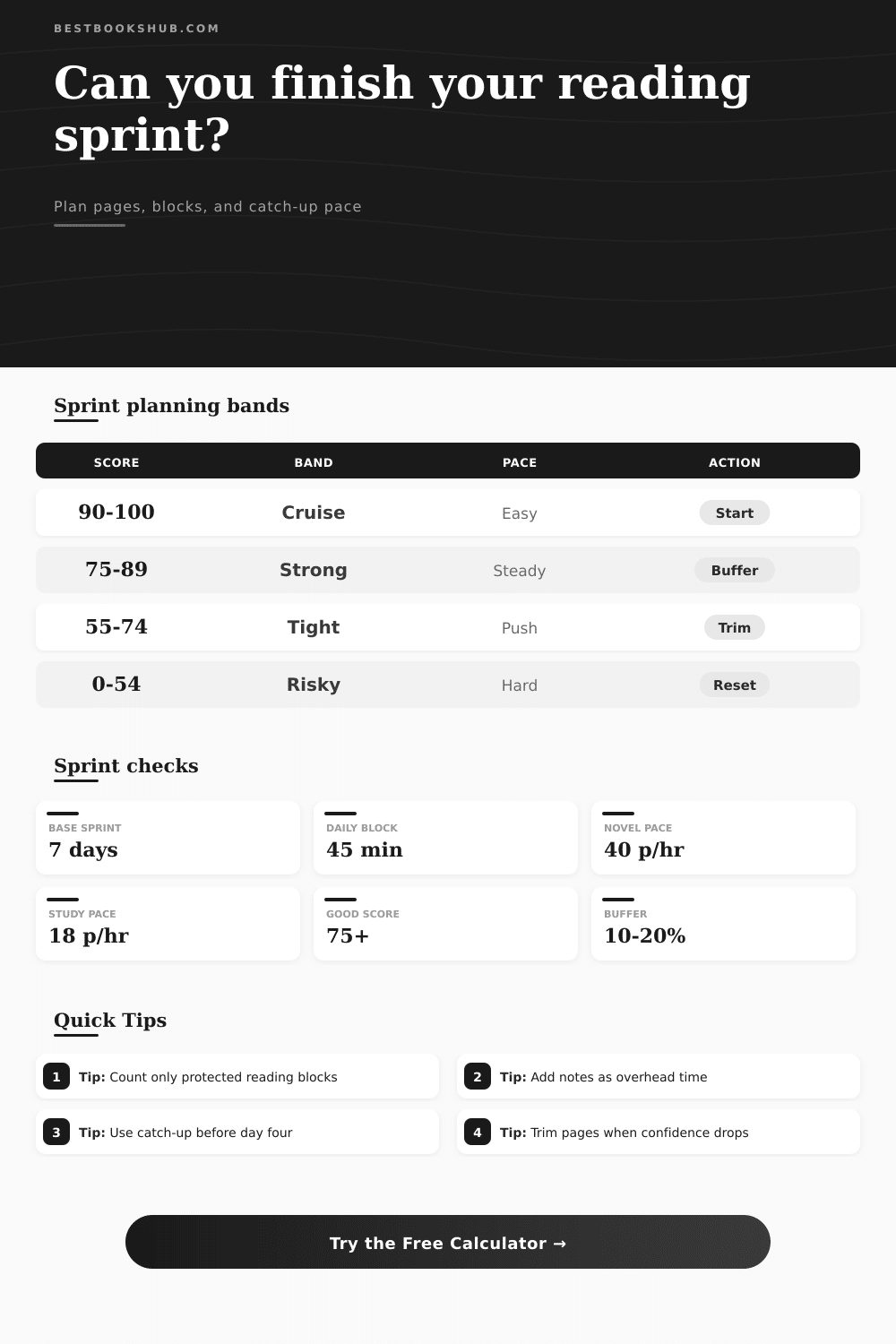
Sure, you have seven more days before the due date. But maybe only four of those days has dedicated reading time slots. Your daily workload will need to adjust accordingly. It will ask how fast you read, how much time is left and how many pages remains. And then it gives you a confidence score. This score lets you know, without lifting a finger, whether you’re cruising or crashing.
The big mistake comes at the beginning: pacing. Most of us guess at our own reading speed… Assuming we read as quickly as we did when reading a gripping thriller. But on sprint days, our eyes might be tired or the material may require deeper concentration. Forty pages per hour works out to be a decent base line if you’re reading something for fun. If the stuff you’re reading is dense or you’re studying hard for an exam, though, that will go downhill quick. To adjust for that kind of trouble, simply add some extra time for rereading and/or note taking. Recognize that it takes time to mark up your book (which is great, because that’s a sign that you are remembering it). That’s why it matters not to forget about that drag factor, otherwise, your plan won’t last long after day three.
The other key variable that gets overlooked until it’s too late is buffer space. Without margin for error, one distraction or unexpected event will throw off an otherwise-tight schedule. If possible, the tool nudges you toward building a little extra time: 10-20 percent more capacity. Not because you’re lazy, this is about risk management. With buffer, you can soak up a bad day and feel good about yourself, instead of like you’ve totally blown the whole sprint. Having buffer makes you flexible rather than anxious.
You are above the seventy-five mark on the calculator. You know that you can take a few hits and still meet your plan. Underneath it, and you’re starting to push your luck, best to extend the timeframe or trim down target. It’s also vital to have catch-up capacity so you can keep the momentum going. Don’t let missing one block early turn into guilt and then snowball. Give yourself some slack by catching up within two days. (Trying to play catch up on the last day will almost always lead to skimming instead of reading, defeating the whole point.)
The tool comes with reference tables showing realistic loads for various sprints. That gives you an idea that building a habit over 30 days is a far different game than doing a 3-day push. This all boils down to the fact that a reading sprint isn’t heroic; it’s about sustaining an intense level of performance. Respect your fatigue limits and protect your focus.
If you plug in your real, rather than ideal, constraints, then the numbers don’t judge. They just show you what’s possible if you’re honest about how fast or slow you can go. What you’ll have is a plan that actualy holds up under pressure. You stop fighting against the clock, and start working with it. Because you’ve built the pathway to get there, the finish line starts feeling less like a wall and more like a natural end.