📚 haul value lab
Book haul cost calculator
Build a mixed book haul from new print, used finds, ebooks, audiobooks, library copies, and subscription credits, then compare net spend, savings, finished-book value, pages, hours, shelf load, and budget fit.
| Haul source | Typical amount | Discount behavior | Value note |
|---|---|---|---|
| New paperback | $12 to $20 | Often coupon eligible | Good for current releases, gifts, and books you expect to keep. |
| New hardcover | $22 to $32 | May have member or launch discounts | Higher cash outlay, stronger keepsake and resale potential. |
| Used bookstore | $4 to $12 | Usually already discounted | Excellent for backlist hauls, but condition affects resale recovery. |
| Thrift or library sale | $1 to $5 | Rarely couponed | Low entry cost, higher unread-risk temptation. |
| Ebook deal | $1.99 to $9.99 | Platform sale driven | No shelf load and no resale recovery in most personal libraries. |
| Audiobook credit | $6 to $16 | Depends on plan allocation | Compare by finished listening hours and actual credit use. |
| Format | Pages or hours | Storage impact | Planning use |
|---|---|---|---|
| Trade paperback | 280 to 420 pages | 0.8 to 1.1 in spine; about 0.7 lb | Use for general fiction and nonfiction haul planning. |
| Hardcover | 320 to 520 pages | 1.0 to 1.5 in spine; about 1.3 lb | Use for gift, collector, and long shelf-life purchases. |
| Mass market paperback | 300 to 450 pages | 0.7 to 1.0 in spine; about 0.4 lb | Use for genre runs and travel-friendly stacks. |
| Graphic novel | 120 to 240 pages | 0.4 to 0.8 in spine; about 0.9 lb | Adjust pages down but shelf weight up for glossy paper. |
| Ebook | Same as text edition | No shelf width or physical weight | Best when budget is constrained by space, not only cash. |
| Audiobook | 8 to 14 listening hours | No shelf width or physical weight | Use listening hours to compare against monthly reading capacity. |
| Haul type | Typical mix | Budget pressure | Watch point |
|---|---|---|---|
| Book club order | 1 new, 2 used, 1 ebook | Moderate | Shipping can dominate a small mixed order. |
| Used bookstore run | 6 to 12 used books | Low per book | Unread risk can erase the apparent bargain. |
| Collector release day | 2 to 5 hardcovers | High | Model resale only if you realistically sell later. |
| Course reading haul | Texts, used copies, library holds | High but required | Completion rate should match assigned chapters, not cover-to-cover reading. |
| Ebook sale sweep | 8 to 20 digital titles | Low cash, high TBR | Cost per finished book rises when many titles remain unread. |
| Family weekend haul | Kids books, gifts, library adds | Variable | Use household reading hours for a realistic TBR month estimate. |
This calculator is for personal reading and shopping planning. It uses your assumptions for tax, discounts, resale, and completion rather than live store pricing.
DISCLOSURE: This post may contain affiliate links, meaning when you click the links and make a purchase, I receive a commission. As an Amazon Associate I earn from qualifying purchases.
With that in mind, you enter a used bookstore with ten dollars in your pocket, then exit with $8 worth of paperbacks. Great! You got a bargain. But these books may linger on your nightstand for months. Meanwhile, your bank account get hit for your impulsive purchases from elsewhere. When you face the truth about unread pages and shelving space, the thrill dissapars fast.
Keeping tabs on the true cost of book stacks is more important then monitoring the register tally during check-out time. After plugging in your combination of formats, the tool do the math for you. You no longer has to guess about reading time and discounts.
The Real Cost of Buying Books
Most readers only consider what they pay at the moment of purchase. They don’t consider that a four dollar ebook require less of a commitment than a twenty dollar hardcover. Not just from a financial perspective but from an environmental one. It take up physical space. The time needed to consume it.
When we haul, we’re buying a whole project management problem: how do I store all this? How do I fit it into my budget? How can I find the time to get through it all? A haul isn’t a single purchase event. It’s a project management task of personal time, storage space, and money. You might buy twenty books, but if you only have energy for five, those remaining fifteen aren’t free assets. They’re future debts waiting to be donated or cleared out.
The other nice part about this setup: it keeps your gift cards and your coupons separate from each other. At the register, that thirty percent off look like you’ve saved big time. Except it isn’t; a gift card or store credit simply means you’re getting product with less money being taken out of your pocket. It doesn’t change the value of what you purchased. By keeping these two amounts separate, you can more easy tell if you really did save anything, or if you just changed the source of the funds. You could of thought you scored a bargain since you paid with points, except you’ll never realize the value of the books, which will sit unread. This is something that almost everyone miss during the afterglow of purchase.
The other question the calculator poses is for your guess of unread risk percentage. It’s maybe the single most truthful answer you’ll give yourself about being a reader. You all underestimates just how many books you’re going to get through in any one month. Assume you’ll complete all the books you purchase? Your cost-per-finished-book appear ridiculous. But if you set it at a more reasonable 80% completion rate, the true cost of each finished story spikes accordingly.
This number is the gap between reading and collecting. Collecting is about getting stuff. Reading is about taking in stories. They sometimes happen together, but they aren’t the same thing.
And then there’s this: Physical limitations matter as well. Yes, hardcovers are so aesthetically pleasing sitting on a bookshelf, but they’re also much heavier than their paperback counterparts (and thicker by way of their spines). That width (and all those ounces!), adds up quickly if you live in a tiny apartment or frequently travel. Audiobooks resolve this issue but create another one (listening time!). Sure, you can cram 50 audiobooks onto your phone, but you won’t be able to listen to 50 books during the course of a single month while still sleeping, feeding your family, and showing up for work. By translating audio hours and pages into an overall reading commitment, the tool allow you to see this time burden.
There’s also the complication of subscription services. While it doesn’t feel like much when you get your monthly credit and think, “Ooh! Free money!” it becomes a recurring purchase for something you may or may not end up wanting. So if you’re using half your credits every month, then you’ve effectively doubled your average price-per-book. It’s a sunk cost that’s simple to overlook until you add it all up.
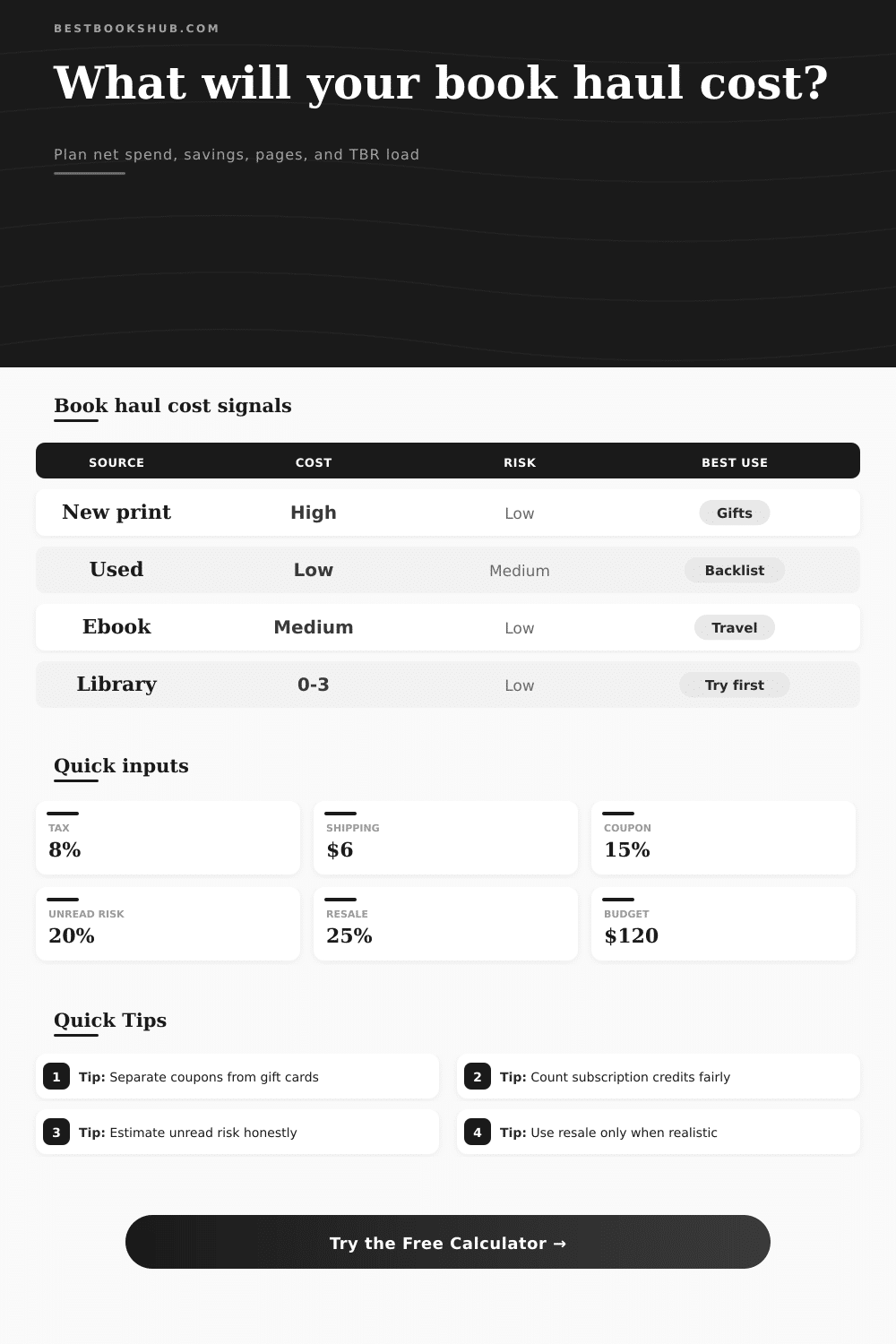
The page break has a handy table breaking out average costs by format. Use it to get an idea of how you stack up against the industry average. Do you find yourself paying way too much on your indie store habit after you factor in shipping and taxes? At a quick glance, you’ll know.
So at the end of the day, a haul is just about matching what you want to read with how much you can realistically store and read. Buy 5 books that you know you’ll get through, but don’t buy 20 that you probably won’t get around to. Your haul does nothing to reflect your generosity or your taste. They are just there to show you the tradeoff between immediate joy and the satisfaction of reading many great books. Knowing the real cost of your haul, in terms of both space and time, makes it possible to choose what keeps your TBR pile in check and your wallet healthy. With this understanding, your wild shopping spree becomes a conscious reading plan.