DISCLOSURE: This post may contain affiliate links, meaning when you click the links and make a purchase, I receive a commission. As an Amazon Associate I earn from qualifying purchases.
So you’ve written this kick-ass first chapter? Good work. But then there’s this: your author bio sounds like a corporate résumé. How does that happen? Well, as writers, we’re trained to build things out, not shrink them down. And so here we have the weird creature of the publishing world, the author bio. It require us to share some personality without oversharing. We have to assert our authority without sounding arrogant.
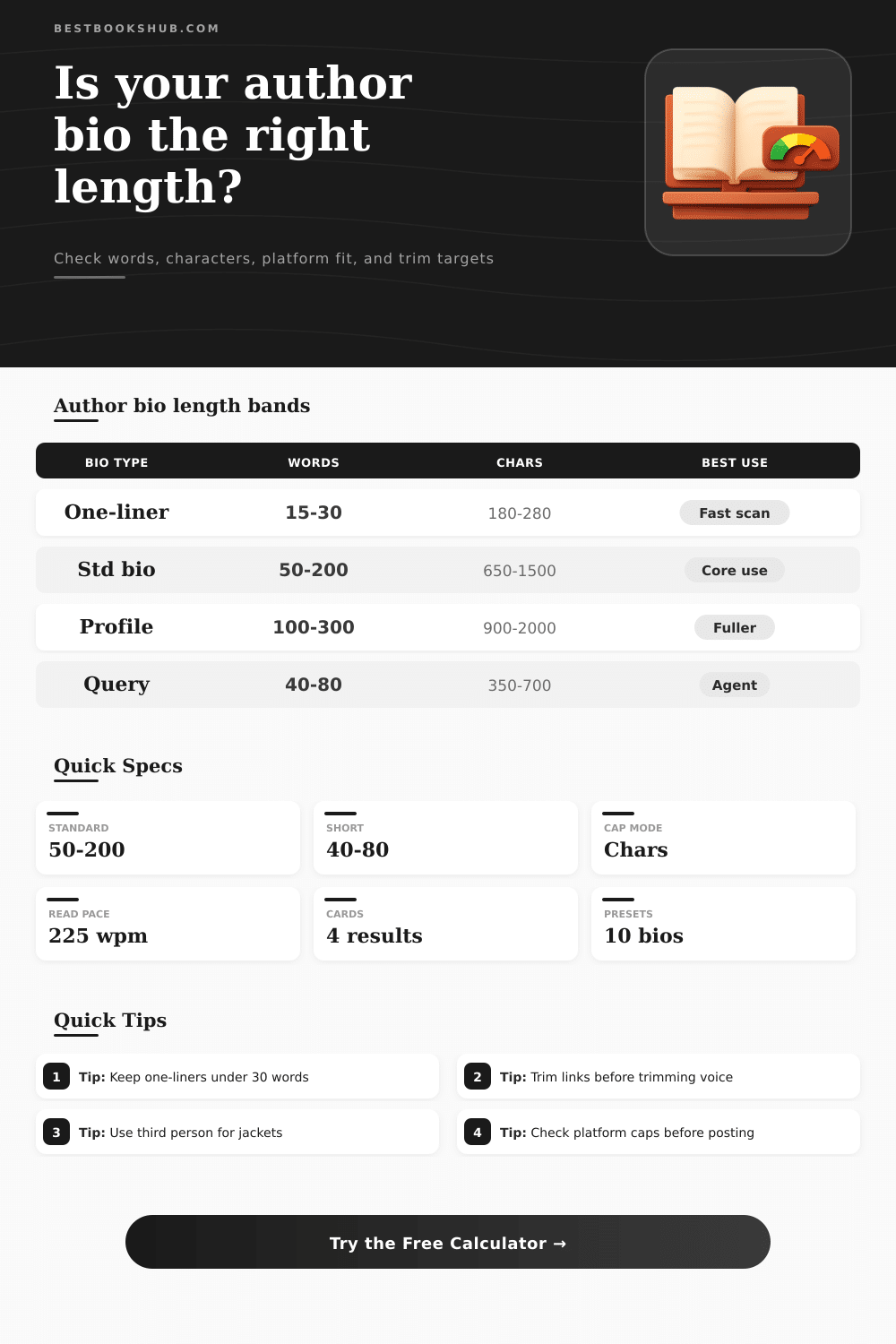
We must also convey all this information within boxes that range from one or two sentences, like a newsletter footer, to many paragraphs, like a book jacket flap. Not only is the length different, it’s also got to do with intention. Once you’ve pasted in your draft, the calculator up top run the math for you. This saves you from guessing which version fits where.
How to Write a Good Author Bio
Beyond the numbers, there’s a strategy to building out these versions. The mistake most writers make is trying to create one master bio then trimming it down later on. Usually, this leave awkward transitions and clunky phrasing. Start instead with your shortest version first. Can you sum up who you are and why people should care about that in fifteen words? If so, you’re off to a good start. Then you layer in context. What is the credential that matters most to audience of your book? Layer it in. Want to humanize the work? Weave in a personal detail.
Think about where your bio will be displayed before writing a word. It will appear next to your book details on Amazon and next to product reviews, which readers skim through quickly to see if they would like your book. A query letter bio isn’t the same. Here, you’re pitching a story to someone (an agent) who’s read thousands of queries. Your credentials should speaks directly to why you are the best person to tell THIS particular story.
The table on the page make that clear. And it explains how many characters per platform there is. You’ll notice that character count varies by platform. Don’t ignore those restrictions. If your bio exceeds the character limit for Goodreads, then all of those words beyond the cut-off point won’t appear. It’s sloppy. It says that you didn’t pay attention to details.
Then there’s voice. Third person is professional and distancing, which is good for press kits and book jackets. First person is warm and immediate, which is useful on your website or newsletter. The tool flags this for you so you can avoid submitting a bio full of “I” to a publisher seeking more formal third person text. It is a small detail, but it is significant: editors will spot those tonal mismatches right away, because they see it as a misunderstanding of the medium.
Don’t shy away from cutting out your favorite adjectives. First check your credentials for length. Odds are good readers aren’t interested in reading about all the conferences you went to, or every time your short story was published in some obscure magazine five years ago. A single solid anchor point is preferable than a laundry list of weak ones. You may include the degree related to your nonfiction subject matter, and you may mention the award directly related to your genre. The rest could of go on hold. Links take up precious character space as well. If you’re providing an email address and a website, consider if one will suffice in this short bio. Usually one clear call to action is sufficient.
How long does it take to read? Most writers don’t pay attention to this metric. They don’t notice it until they are asked to read their own biography out loud at a reading or event. If you read too quickly, you sound nervous. If you read too slowly, you start to drag. Time yourself to see how many seconds your bio would take to read in a normal speed. If it’s two hundred words, then it will take roughly fifty seconds to read out loud. On stage that’s a long time. For events, aim shorter; for web sites, you can breathe a little bit easier.
The smart thing to do is build three versions of your bio: keep a one liner for use on social media, a short paragraph for flaps and queries, and a longer version for your press kit and website. When you have a new book published, update all at once. Recognition comes from being consistent and showing that you know how to present yourself differently in different formats.
Bio writing is precise; general writing is expansive. After spending years creating worlds and characters it’s time to spend an hour creating their frame. Your writing will be sharper, clearer, and so much more inviting than when a reader arrives at your book to meet you. Begin with the shortest and then build from there. This way your bio only opens the door and lets your work do the rest of the talking.