🌙 Read-aloud schedule planner
Bedtime Story Length Calculator
Estimate when to start bedtime reading by target lights-out time, bedtime window, child age, read-aloud WPM, pages per story, questions, wind-down buffer, and repeat requests.
Choose a bedtime scenario, then adjust the story size, question time, repeat requests, and wind-down buffer for the actual night.
DISCLOSURE: This post may contain affiliate links, meaning when you click the links and make a purchase, I receive a commission. As an Amazon Associate I earn from qualifying purchases.
Short pages, lots of pointing, and a small repeat allowance.
Balanced page turns, questions, and a calm finish.
More words per page with shorter discussion pauses.
Best when the wind-down buffer is already protected.
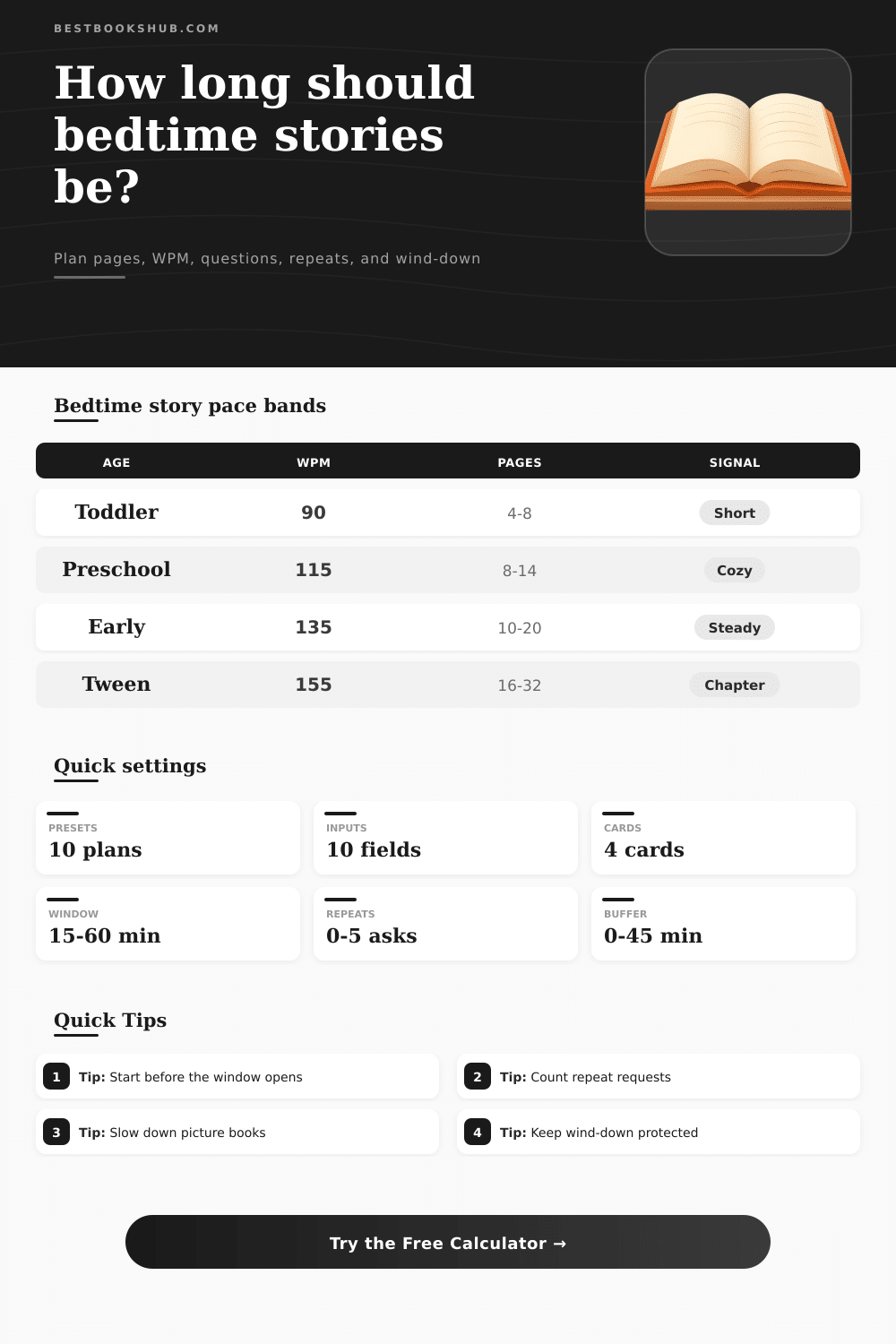
| Age band | Typical read-aloud WPM | Comfortable story time | Planning note |
|---|---|---|---|
| Toddler, 1-3 | 80-105 WPM | 5-10 minutes | Extra pointing and repeat requests matter more than word count. |
| Preschool, 3-5 | 95-130 WPM | 8-16 minutes | Questions can add several minutes to a single picture book. |
| Early reader, 5-7 | 115-145 WPM | 10-22 minutes | Shared decoding or taking turns slows the plan. |
| Grade-school, 7-9 | 130-165 WPM | 15-30 minutes | Chapter endings and recap questions shape the stopping point. |
| Tween, 9-12 | 145-180 WPM | 20-40 minutes | Longer chapters work best with a firm wind-down buffer. |
| Format | Words per page | Usual pages | Best calculator setting |
|---|---|---|---|
| Board book | 5-25 words | 6-12 pages | Use low WPM and allow one repeat. |
| Picture book | 25-90 words | 12-32 pages | Use the question fields for pauses. |
| Rhyming or poem book | 20-70 words | 8-24 pages | Use a slower WPM for rhythm. |
| Early reader | 60-140 words | 16-48 pages | Add switching time if the child reads too. |
| Chapter book | 180-320 words | 6-18 pages | Plan by minutes, not chapter count. |
| Window size | Story target | Wind-down target | Good use |
|---|---|---|---|
| 15 minutes | 5-8 minutes | 7-10 minutes | One short book or a familiar reread. |
| 25 minutes | 10-14 minutes | 8-12 minutes | One picture book with a few questions. |
| 35 minutes | 16-22 minutes | 10-15 minutes | Two short books or one longer story. |
| 45 minutes | 24-30 minutes | 12-18 minutes | Chapter read-alouds and weekend nights. |
| 60 minutes | 35-45 minutes | 15-25 minutes | Special long reads with a protected finish. |
| Bedtime behavior | Suggested setting | Added time | Calculator note |
|---|---|---|---|
| Quick pointing | 3-5 pauses at 10 seconds | Under 1 minute | Use for board books and naming pages. |
| Story questions | 4-8 pauses at 20-35 seconds | 2-5 minutes | Common for preschool picture books. |
| Retelling or predictions | 5-10 pauses at 45-60 seconds | 4-10 minutes | Use for comprehension-heavy nights. |
| One favorite repeat | 1 repeat at 50-100 percent | Half to full story | Set repeat share to the section actually reread. |
| Multiple repeat asks | 2-5 repeats at 25-75 percent | Varies widely | Watch whether this pushes past the window. |
How many pages should you read before lights-out? How Many Minutes? When Should I Start Reading? Meet the bedtime story length calculator.
It factors in a wind-down buffer. It adjusts based off repeat requests/questions. It calculates exactly when to begin so you can finish just as lights-out comes on. This turns your evening routine into something predictable. The best part is that you get enough rest for tomorrow while still enjoying the fun of reading.
How to Use the Bedtime Story Calculator
Backwards from darkness: “If the lights are going off, then how far back do you go?” says many parents who pick a book based on its appearance, looking shorter. But that’s where trouble begins. Even though it might be a thin picture book, a little text can make those minutes accumulate fast, especially when you stop and ask questions after each page.
Enter your reading rate, measured in words-per-minute. Why? Because silently reading is not like reading aloud. You point at pictures, act out voices, and wait for a reaction. Slow down your pace by entering that number and the calculator will adjust total time accordingly. That way, you won’t mistakenly think a 10-page book takes five minutes but really takes fifteen including conversation.
The other variable is repeat requests. Most kids will have a section of the story that they want repeated (sometimes multiple times). The calculator allows you to input the portion of the story that they’re requesting be repeated and how many times they’ll ask. Bedtime planning is never linear, which this takes into account. Sometimes you set aside 30 minutes for two books but then you find yourself with several repeat requests after starting the first book leaving no time to squeeze in second book. Including those repeat requests in your estimate prevents having to rush at the end and/or argue about stopping places when time isn’t enough.
The next thing is the wind-down buffer. That’s how I describe that space between the end of the night-time routine and sleep time, whether they slide immediately into dreams or need some time to decompress, ask final questions, or adjust their blankets. The idea is that by separating the time spent actively reading with your kid and the time they spend getting sleepy, you can get a better sense of what really fits into the time you have.
If you have forty minutes until lights out and allocate all of it to stories, you leave no room for the quiet settling period that signals sleep is coming. You only have 20 minutes before bed…do you want to read for 15 minutes, leaving yourself just enough time to finish tucking them in? That hurriedness doesn’t feel relaxing and therefore undermines the calming ritual.
On the page, there are reference tables for the various formats and age bands. An older child who listens to chapter novels will move faster then a toddler who reads board books. These formats also impact how many words per page is suggested. Early readers can pack in more text with fewer pages while picture books might span two pages with just fifty words. Using the right preset helps your expectations match reality so you don’t try to fit too much text into a limited timeframe. It keeps things peaceful at night.
Knowing that you have a finite amount of time for books and questions allows you to begin bedtime reading when it makes sense. There’s no scrambling and no haggling about “Just one more page.” They fall asleep peacefully and quietly because everything has run its course naturaly. It saves the peace while still keeping the experience pleasant by letting the math worry about logistics.