🎁 Gift list planner
Book Gifting Budget Calculator
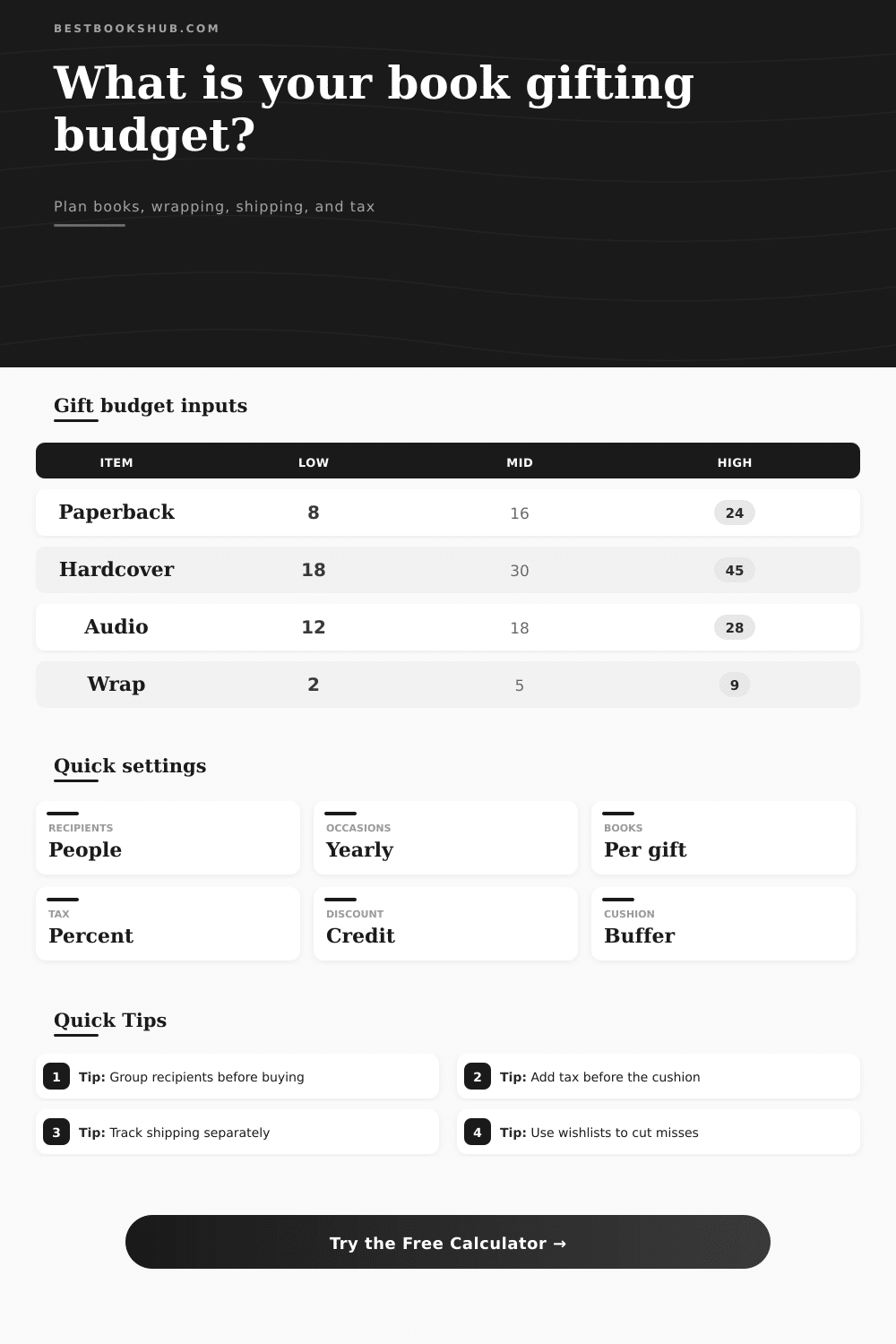
Plan a book gift budget across recipients, occasions, formats, wrapping, shipping, tax, discounts, group contributions, and a practical surprise cushion.
| Format | Typical gift price | Good fit | Budget note |
|---|---|---|---|
| Mass market or used paperback | $4 to $12 | Large lists, swaps, classrooms | Works well when condition is checked in person. |
| Trade paperback | $10 to $24 | General birthday or holiday gifts | Strong default because price and selection stay flexible. |
| Hardcover | $18 to $45 | New releases, close friends, family | Pair with a smaller card or skip extras if the book is the statement. |
| Ebook gift | $5 to $18 | Remote readers and quick delivery | Verify platform before counting on a digital gift code. |
| Audiobook credit | $12 to $28 | Commuters and busy readers | Often better as a subscription credit than a title-specific pick. |
| Graphic novel or manga | $10 to $35 | Series readers and visual books | Budget for volume continuity when gifting the first book. |
| Box set or bundle | $25 to $80 | Milestones and shared households | Treat as multiple books but one gift moment for wrapping. |
| Deluxe illustrated edition | $35 to $90 | Collectors and keepsake gifts | Reserve for premium recipients or one-off occasions. |
| Extra | Low range | Typical range | When to include |
|---|---|---|---|
| Gift wrap or bag | $1 to $3 | $4 to $9 | Include for physical books handed over in person. |
| Card or note | $0 to $2 | $2 to $6 | Useful when the book choice needs context. |
| Domestic shipping | $4 to $7 | $8 to $15 | Use a higher number for hardcovers or multi-book packages. |
| International shipping | $12 to $25 | $25 to $60 | Often worth replacing with an ebook or local-store gift card. |
| Sales tax | 0% | 5% to 10% | Apply to taxable items before adding the final cushion. |
| Budget cushion | 5% | 10% to 20% | Covers price changes, substitutions, and last-minute upgrades. |
| Scenario | Gift count | Book type | Planning move |
|---|---|---|---|
| One birthday gift | 1 recipient | Hardcover or trade paperback | Spend more on the book, keep extras simple. |
| Holiday family list | 6 to 12 gifts | Paperbacks and select hardcovers | Set premium recipients before shopping. |
| Classroom exchange | 15 to 30 gifts | Used, paperback, or leveled readers | Use a strict cap and buy in batches. |
| Book club swap | 8 to 14 gifts | Paperbacks or themed bundles | Budget one book plus a small note per member. |
| Wedding or housewarming basket | 2 to 6 books | Cookbooks, art books, keepsakes | Treat the basket as one gift moment with several books. |
| Long-distance holidays | 4 to 10 shipped gifts | Ebooks, audio, or local shipping | Compare shipping against digital delivery. |
Wrapping, cards, shipping, and tax can turn a modest book list into a much larger checkout total, especially when gifts are mailed separately.
DISCLOSURE: This post may contain affiliate links, meaning when you click the links and make a purchase, I receive a commission. As an Amazon Associate I earn from qualifying purchases.
Set a standard tier and a premium tier first. Then choose titles inside those limits instead of letting one beautiful edition quietly reset the whole plan.
At first it was just this idea: give someone stories. And then when you get the bill, it says something else. There are taxes and shipping costs. A hardcover book and wrapping paper cost more then your monthly coffee budget. The issue isn’t that you’re too obsessed with books. The issue is that we all budget only for the cost of the book itself, never thinking about how many invisible costs add up on each package sent, each piece of gift wrap used. But you don’t have to guess: once you plug in how many people you want to send it to, and what format(s) you’d prefer, this calculator will do all of that math for you (see above).
Before you even go out the door, it makes you face up to the fact that an illustrated deluxe edition is not the same as a plain old trade paperback. And that matters, because the former may cost you three times as much as the latter, a hardcover new release could be priced at thirty bucks, with its paper counterpart half that. Depending on your format choice, you’re giving away the exact same story but for wildly different sums.
How to Budget for Book Gifts
Extra stuff add up fast, something most of us tend to underestimate. When you’re purchasing one gift item, that four dollar gift bag isn’t such a big deal. But when you’re mailing a dozen or so book to grateful family members around the country, those bags start to cost forty bucks. That is before we even talk about postage! That’s where your budget tends to bleed out. Standard package shipping prices has been creeping up over the last few years, while international shipping can make an otherwise reasonable import of literary fiction feel like a pricy purchase. If you don’t watch out, the cost of getting it from Point A to Point B can be just as much as the price of the book itself. The reference table on the page make all this clear.
Consider creating tiers of your list instead of thinking in terms of a straight line. Acquaintances may deserve standard gifts while close family members gets the good stuff. This creates a boundary around scope creep. When you see a gorgeous limited edition on the shelf and think, “oh, my cousin will love this!” you might only realize later that you’ve spent way too much for the whole holiday season. Defining premium vs. Standard allows you to create a safe zone for your wallet.
When it gets to be a bit much in terms of physical logistics, there’s always an escape hatch in digital form. Lower prices (and no shipping) in ebook gift codes gets rid of all that. Then there are audiobooks for those who prefer listening over reading during their commute. Audiobook credits accomplishes the same thing. Because these formats take away the variables of distance and weight, they alter the math. Yes, you have to confirm your recipient’s platform, but not going through the post office decrease the financial risk by quite a lot.
And let’s not forget that it can be useful to have some wiggle room in your plan. Prices shift between the time you research a book and the time you buy it. Yes, there are sales. But there are also price increases on bestsellers. With a little leeway, you can splurge on a surprise present without stress or maxing out your card. Scramble becomes adjust. You should of planned for this.
We don’t want to be cheap-cheap-cheep, but that’s not the point. We want to be purposeful with our spending so that giving doesn’t feel like a burden but rather a genuine gesture. If you’ve got a clear view into the cost of every single component, from the tape holding the box together to the ink printed onto the pages. Then you’ll be able to make better decisions regarding what/when/how you give. Planning out what books I’d give and when made buying them as gifts more strategic and generous, rather than just spending money without knowing if shipping costs would put me over budget. The last thing you want to do is worry about that once the first holiday card hits your mailbox, it’s better to find that balance before the season starts. Actually, modern books can be pricy.