📖 Reading gap tracker
Pages behind schedule calculator
Compare where your reading plan says you should be today with your actual page, then turn the gap into catch-up pages, minutes, risk, and a seven-day recovery path.
Choose how you know the plan: by start and due dates, by the planned page you should have reached today, or by a fixed daily page quota.
| Material type | Time factor | Typical page speed | What changes |
|---|---|---|---|
| General trade book | 1.00x | 35-55 pages/hr | Balanced prose, headings, and ordinary page density. |
| Narrative fiction | 0.92x | 40-70 pages/hr | Story flow often makes catch-up sessions easier. |
| Dense nonfiction | 1.22x | 22-40 pages/hr | Definitions, examples, and note-taking slow the page rate. |
| Textbook or course packet | 1.45x | 12-28 pages/hr | Problems, diagrams, and review questions need extra time. |
| Academic article stack | 1.55x | 8-24 pages/hr | Abstracts, methods, citations, and claims require review. |
| Graphic novel or comics | 0.70x | 55-95 pages/hr | Page count moves faster, but visual reading still matters. |
| Recovery pattern | Best gap | Daily effect | Use when |
|---|---|---|---|
| Smooth daily catch-up | 10-50 pages | Same extra pages each reading day | You can extend normal sessions without stress. |
| Front-load first half | 30-90 pages | More pages early, lighter finish | The deadline is close and momentum matters. |
| Weekend block first | 40-120 pages | One larger block reduces daily extras | You have a free block before the next meeting. |
| Gentle ramp-up | 5-45 pages | Smaller first sessions, larger later ones | You are restarting after a slump or heavy week. |
| Situation | Starting signal | Calculation focus | Helpful adjustment |
|---|---|---|---|
| Book club | Behind the meeting page | Pages to discuss by date | Use a 10% buffer for notes. |
| Class reading | Behind syllabus page | Assigned pages before class | Use textbook or academic factor. |
| Library loan | Due date approaching | Remaining pages before return | Read daily and keep buffer low. |
| Personal goal | Behind monthly pace | Pages needed to restore streak | Widen the catch-up window. |
DISCLOSURE: This post may contain affiliate links, meaning when you click the links and make a purchase, I receive a commission. As an Amazon Associate I earn from qualifying purchases.
Let’s say you’re reading a meaty chunk of nonfiction and find yourself with 40ish pages remaining before your discussion group meet the next day. Panic! You don’t want chaos; you want a plan. Enter the page count. Knowing exactly where you stand prevents guesswork. It helps you create a plan so you don’t just feel vaguely worried, but know actualy how many pages you need to read.
This is all done automatically; the calculator above take care of the math for you. It compares the page count on your current book to the one listed on your schedule for today. Then, beyond merely informing you how far behind or ahead you are, it converts the difference into a quantified amount of additional reading time every day. It considers both your reading speed and density of what you’re currently reading. Forty pages of heavy academic theory is going to feel a lot more different than forty pages of a light novel, which is why there’s a set of selector for material types.
How the Calculator Helps You Plan Your Reading
When most people realizes they’ve fallen behind, they grind it out at night until they catch up. But that doesn’t usually work. Because sleep deprivation is more effective at killing memory than slow reading, you’re better off distributing the pain across multiple day. And if you really want to catch up, you can do huge blocks on weekends while maintaining your weekday schedule. By giving yourself options like front-load the work early in the week or saving it for a Saturday morning session, the calculator shows you how much flexibility you have. It allows you to avoid burning out, which makes reading less of a painful exercise and more of an enjoyable one.
To put all of those numbers in perspective, it help to know the reference tables on page. Certain types of materials. Such as textbooks and course packets, has a higher time factor, which makes sense: they require active engagement with diagrams and problems and can’t be skimmed like narrative fiction. They must be actively engaged with, and you’ll need more time for them. Recognizing this will prevent you from underestimating your study time. Instead of having a lighter load each day, just face the fact that it will be heavier up front so when you get to Tuesday and realize you’re still three chapters behind, it won’t come as a surprise.
What about the other buffers? Most people don’t realize that the time percentage matter. Having a 10% or 15% safety net can help when life gets busy, when you struggle to find time to read certain chapter, or when something unexpected comes up. If you don’t have the buffer and anything interrupts you even just a little bit, then you’re right back at square zero with no progress toward your plan. While having a strict plan doesn’t hold if put under stress, a flexible one will bend and keeps its shape. You could of customized how big the safety net should be based off how confident you are with your timeline.
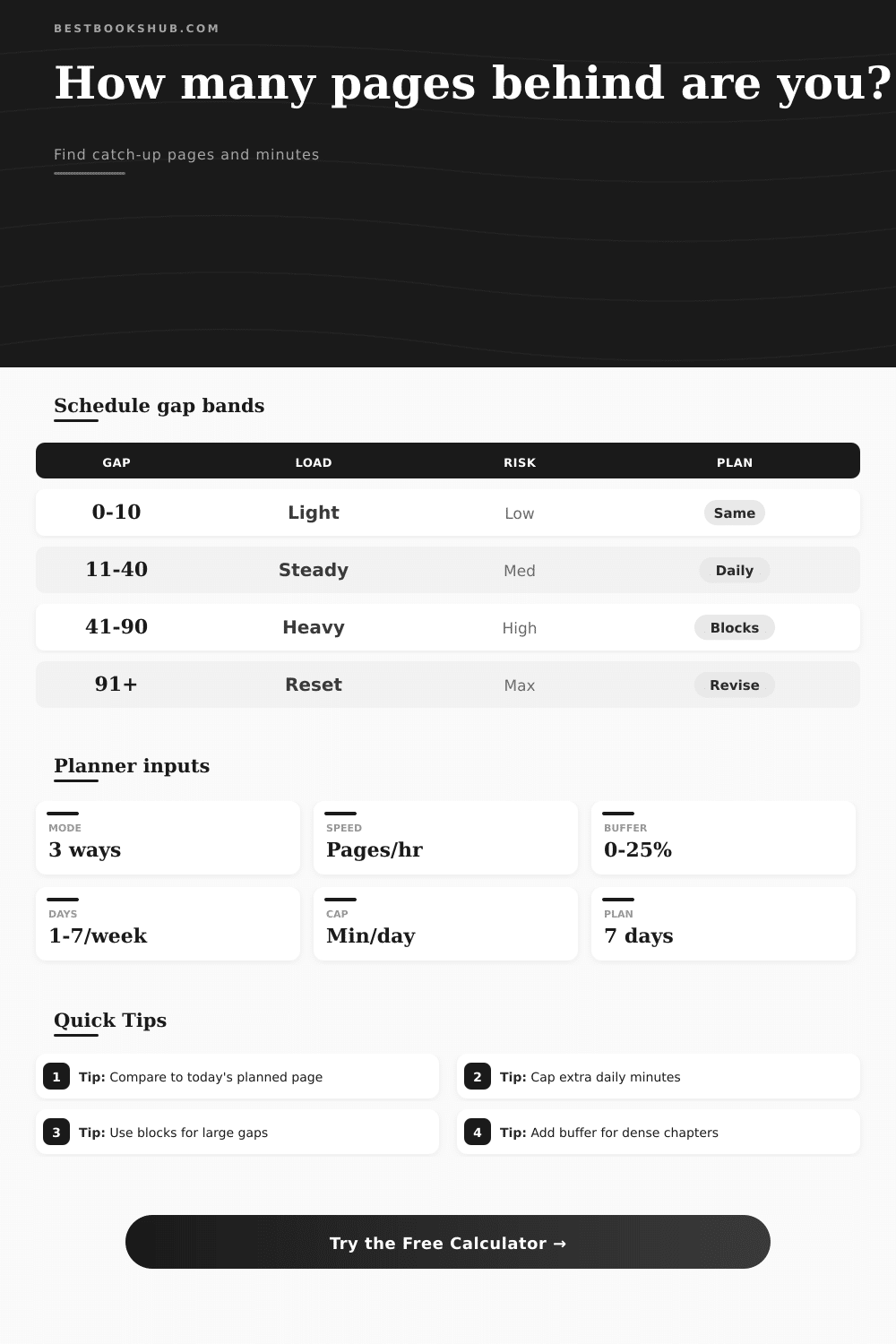
Anything higher than 90 page gap becomes critical risk territory. Now, everyday tweaks won’t do the trick. Time to renegotiate with your book club leader/teacher, and see if there’s an audiobook version (for speeding up the process via passive listening). But the calculator will give you plenty of warning here… It flags these high-risk scenarios clearly, so you can make informed decisions instead of crossing fingers.
We read marathons, not sprints. We must jog in order to keep pace. Perfection isn’t the goal. Consistency is. Realistic recovery is. Measure your shortcoming. This removes the emotional burden of lateness and replaces it with a plan. It shows what you need to do and the material challenges ahead. It tells you how many minutes to add to your calendar. It also tells you when to ask if you need help. That clarity? It worth infinitely more than the pages.