⏱ Series binge planner
Series Binge Time Calculator
Estimate how many hours and calendar days a book series binge will take using remaining books, pages per book, gap days, daily sessions, reading speed, recap time, and binge intensity.
Load a common series shape, then adjust the count, page length, pace, recap overhead, and rest gaps to match your actual reading plan.
| Format | Typical words per page | Good WPM range | Binge planning note |
|---|---|---|---|
| YA and fast genre | 230-270 words | 250-350 WPM | Works well for focused sessions and shorter gaps. |
| Commercial fiction | 260-300 words | 220-320 WPM | Use as the neutral default for many series. |
| Literary or classics | 290-340 words | 150-240 WPM | Slower reading and more recap time are common. |
| Dense fantasy | 300-360 words | 170-260 WPM | Names, maps, and lore can make recaps valuable. |
| Graphic novel or manga | 80-150 words | 300-600 WPM | Pages turn quickly, but visual reading still takes attention. |
| Intensity | Multiplier | Best fit | Risk signal |
|---|---|---|---|
| Leisure drift | 0.75x | Low-pressure rereads, busy weeks, casual evenings. | Finish date stretches if gaps stay long. |
| Balanced routine | 1.00x | Normal nightly reading with predictable sessions. | Missed sessions move the calendar quickly. |
| Focused binge | 1.15x | Protected blocks, active note control, fewer distractions. | Recap time matters for complicated plots. |
| Vacation push | 1.35x | Travel reading, long weekends, challenge bursts. | Hard to maintain after the free window ends. |
| Marathon sprint | 1.60x | Short rescue windows and highly readable books. | Use only when the daily hours are actually available. |
| Series pattern | Gap days | Recap per book | Planning use |
|---|---|---|---|
| Direct continuation | 0-1 day | 5-10 minutes | Best when plot memory is fresh and momentum matters. |
| Moderate complexity | 1-2 days | 10-20 minutes | Good for mysteries, fantasy, and multi-viewpoint books. |
| Dense lore or classics | 2-4 days | 20-45 minutes | Protects comprehension when names, timelines, or style are heavy. |
| Long break between releases | 5+ days | 45+ minutes | Use when rereading notes or summaries before the next book. |
| Series size | Book count | Common page total | Calculator watch point |
|---|---|---|---|
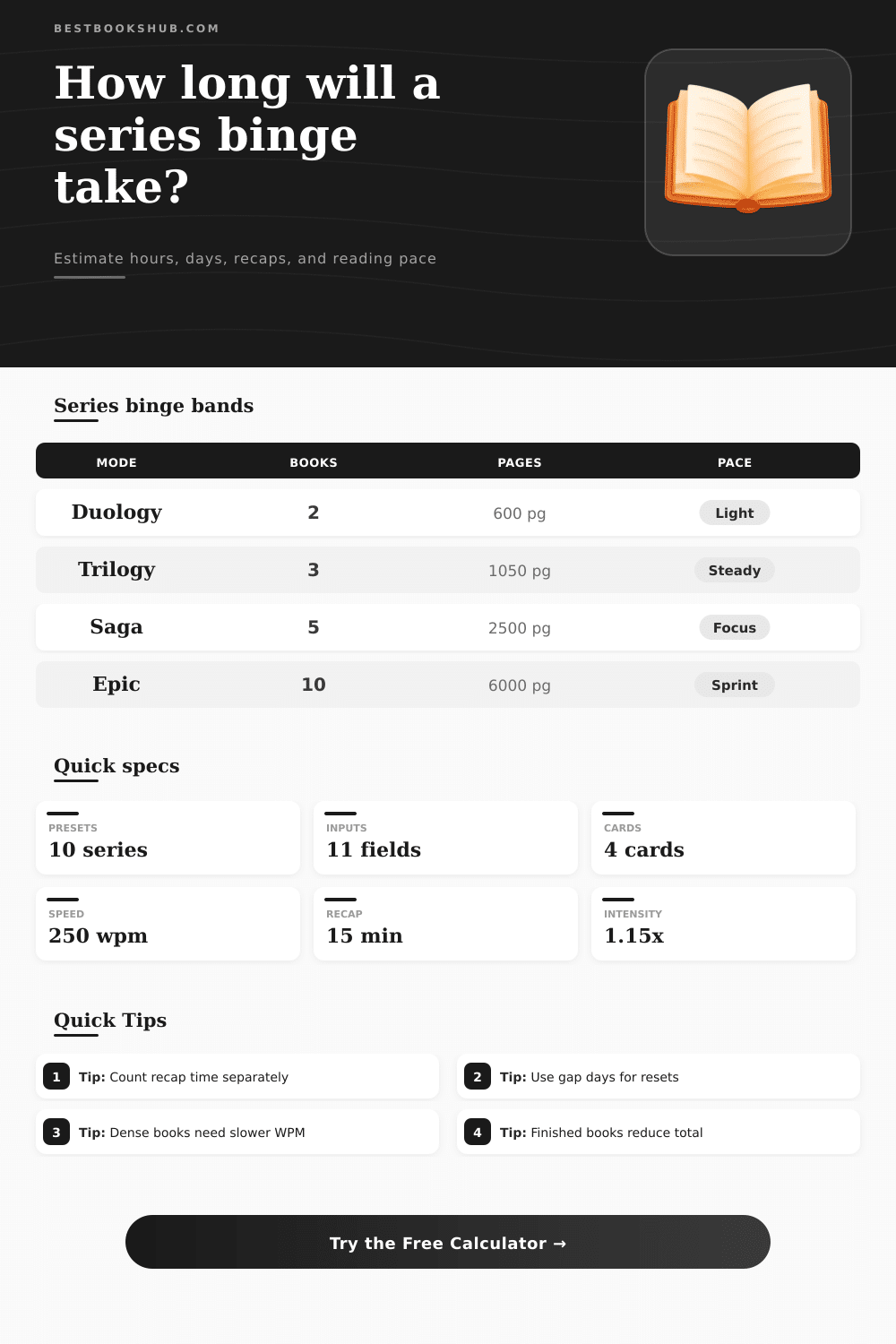
| Duology | 2 books | 500-900 pages | Gap days may be a large share of the full plan. |
| Trilogy | 3 books | 900-1800 pages | Average pages per book usually gives a stable estimate. |
| Long arc | 4-6 books | 1400-3600 pages | Recap minutes start to become a meaningful overhead line. |
| Epic run | 7-12 books | 3000-8000+ pages | Active days per week and intensity drive the finish window. |
DISCLOSURE: This post may contain affiliate links, meaning when you click the links and make a purchase, I receive a commission. As an Amazon Associate I earn from qualifying purchases.
It’s Tuesday and you decide to buy a new book series, planning to get through them all by Sunday. By Thursday, you are on page forty of second book and wonder what happened to your life. It’s not normaly a question of enthusiasm; more often than not, it’s one of logistics. Binge reading isn’t treated as a task with limits but rather a casual activity. You have an ever-expanding pile of pages and limited time in the evening to dedicate to them.
When you input your own parameters, the calculator perform all of the math for you, no need to speculate about whether it’ll be a month or a weekend before finishing that trilogy. However, the quality of your inputs determines the quality of this tool. Many people assume they read at a consistent rate when in fact they don’t. You read different when reading a fast romance novel versus a complex fantasy novel packed full of characters and maps. Genre affects the number of words per page (see the reference table). Guessing your speed using light fiction then applying it to heavy classics will result in an inaccurate timeline.
How to Plan Your Reading Time
Another variable is recap time. That doesn’t sound like much, 15 minutes to review notes before diving into the next book… But that add up fast. If you’re working through a ten-book saga, that’s several hours of administrative reading time. People estimate their reading time as: How long does it take me to read the words? They don’t factor in how long it takes them to remember the words.
The tool’s intensity multiplier account for your mental state. Marathon sprint mode assumes high focus (you’re ready to go); leisure drift mode reflects a busy week where you’re skimming. Be honest with yourself about what’s true in your world.
Gap days matter just as much as reading days. With binge planning, a rest day isn’t wasted time; it’s preservation time. You wouldn’t of understood as well after six continuous hours of reading. A break between chapters (or books) help avoid burnout and allows for a realistic finish date. Those breaks, when you take a day off between thick books, get included in the overall calendar window, allowing you to see exactly how many days until completion. This is an important distinction: it treats reading hours different than calendar days.
So when the tool says, “You’ll have to read two-hundred pages a day to make it by vacation’s end,” you know: the plan isn’t working. And so you change your inputs. Maybe you lower the intensity multiplier, or perhaps you trim down number of books in this cycle. Because now, instead of feeling guilty for failing, you realize you were mathematically overloaded.
And then there’s formatting options as well. This includes manga, graphic novels, and other similar formats. Will have less text on each page than a prose book. In these cases WPM isn’t going to be particularly relevant. It’s about the pace not the text itself. Use this tool to adjust these estimates for your specific reading habits. This ensures the tool return an accurate time, regardless of what medium you are using. Whether it’s images or text, the time should reflect the true cognitive load.
Binge reading shouldn’t be a second job. It should be rewarding. Understand how your brain work and how it balances speed, volume, and recovery. This helps you set up a binge habit where you enjoy the process instead of dreading it. Because here’s the thing: you don’t have to read all the pages at lightning speed in one weekend if you simply want a plan that honors your time.
The stack of books will stop appearing as a mountain and start looking like a manageable path, which is what happens when you adjust your expectations to match the math of your attention span. And that feeling of control is priceless compared to any speed reading hack.